
Iranian Foreign Minister Abbas Araghchi visited Pakistan for the second time in three days amid uncertainty surrounding potential peace talks with the US. The visit follows discussions in Oman regarding regional security and efforts to resolve the Iran-US conflict.

Iran's Foreign Ministry has denied reports of planned talks with the United States during a visit to Islamabad, Pakistan, despite US envoys also visiting the region.

Iranian Foreign Minister Seyed Abbas Araghchi spoke with Indian counterpart S Jaishankar to discuss the West Asia crisis, following discussions with Russian President Vladimir Putin.

Russian President Vladimir Putin has offered his support to help bring peace to West Asia, praising the Iranian people for their resilience. This comes as Iran seeks to resolve the conflict with the US, following discussions with Pakistani and Omani leadership.

Iranian Foreign Minister Abbas Araghchi said his trip to Islamabad was "very productive" and involved "good consultations" with Pakistan's top leadership amid uncertainty over the second round of peace talks to resolve the war in West Asia.

US President Donald Trump announced a finalised peace deal between the US and Iran, set for signing on June 19 in Switzerland, with key figures like J D Vance, Steve Witkoff, and Jared Kushner from the US side, and Abbas Araghchi and Mohammad Bagher Ghalibaf representing Iran, alongside Pakistani mediators Field Marshal Asim Munir, Shehbaz Sharif, Ishaq Dar, and Mohsin Naqvi, playing crucial roles in the diplomatic breakthrough.

An Iranian delegation, led by Foreign Minister Abbas Araghchi, is expected to arrive in Islamabad for the second round of peace talks with the US, according to Pakistani media reports. This follows a phone call between Deputy Prime Minister Ishaq Dar and Araghchi regarding the US-Iran ceasefire and Pakistan's diplomatic efforts.

Pakistan's Interior Minister Mohsin Naqvi visited Tehran for the third time recently to mediate peace amidst rising tensions between the US and Iran. Pakistan is actively leading diplomatic efforts to de-escalate the conflict in West Asia, which has impacted global energy markets and trade.

The United States Central Command (CENTCOM) has announced that American forces are maintaining a strict maritime restrictive operation in the region, continuing to enforce a blockade against Iranian ports.

In a significant diplomatic manoeuvre aimed at de-escalating regional tensions, Iran has reportedly submitted a "new proposal" to the United States through Pakistani intermediaries.

Pakistan's Interior Minister Mohsin Naqvi has been in Tehran meeting with Iranian officials in an attempt to mediate and resolve the ongoing conflict between the US and Iran. This marks Naqvi's second visit in less than a week as Pakistan seeks to bridge the differences between the two nations and establish long-term stability in the region.

Delegations from the US and Iran have arrived in Islamabad for talks aimed at resolving the conflict between the two nations, following a ceasefire brokered by Pakistan. The negotiations are being closely watched due to their potential impact on regional security and global diplomacy.

Iranian President Masoud Pezeshkian is on a state visit to Pakistan to discuss the full implementation of an agreement signed between Iran and the US, alongside regional and international developments. The visit also aims to strengthen bilateral cooperation across various sectors, following recent high-level talks between the US and Iran in Switzerland regarding regional security.

Pakistan is hosting a quadrilateral summit of foreign ministers from Saudi Arabia, Egypt, and Turkiye to discuss the conflict in West Asia and explore avenues for peace. The summit includes discussions on regional developments and meetings with Prime Minister Shehbaz Sharif.
Pakistan is set to host a quadrilateral summit of foreign ministers from Saudi Arabia, Egypt, and Turkiye to discuss the ongoing conflict in West Asia and explore avenues for peace negotiations.

Pakistan is playing a key role in facilitating talks between the US and Iran, but the future of these negotiations remains uncertain. Despite ongoing diplomatic efforts, no dates have been set for a second round of discussions.

Pakistan's Chief of Defence Forces Field Marshal Asim Munir held talks with Iranian leaders in Tehran to help resolve the conflict between the US and Iran, following a recent ceasefire agreement.

An Iranian delegation, led by Foreign Minister Abbas Araghchi, concluded high-level meetings in Islamabad, delivering an 'official list of demands' to Pakistani leaders for the US and Israel. This comes as President Trump cancelled his envoys' visit to Islamabad amid ongoing efforts to facilitate peace talks between Iran and the US.

National Security Advisor Ajit Doval met UAE President Mohamed bin Zayed Al Nahyan to discuss deepening strategic partnerships and the regional situation, following meetings with Saudi Arabian leaders earlier in April.

Foreign Ministers from Saudi Arabia, Egypt, and Turkiye convene in Pakistan for a summit aimed at de-escalating the ongoing conflict in West Asia, with Pakistan actively seeking to broker peace through dialogue and diplomacy.

China has called on Iran to reopen the Strait of Hormuz and expressed appreciation for Tehran's commitment not to develop nuclear weapons, a key demand of the US to end the conflict.

Pakistan's Foreign Minister Ishaq Dar met with his counterparts from Egypt and Turkiye in Islamabad ahead of a quadrilateral summit, including Saudi Arabia, to discuss the ongoing conflict in West Asia and explore avenues for peace.

High-level peace talks between the US and Iran, facilitated by Pakistan, aim to de-escalate the conflict in West Asia and potentially reshape regional stability.

Iran has submitted its latest proposal aimed at advancing negotiations to end the ongoing West Asia conflict with the US, days after the Islamic Republic submitted a fresh proposal through regional intermediaries to cease its military operations in the Strait of Hormuz, which is likely to get rejected by Washington.

US Vice President JD Vance leads a delegation to Islamabad for talks with Iran, expressing optimism while warning against bad faith negotiations from Tehran.

As the negotiations continued, the Iranian government said on social media that "talks between Iran and the US in Islamabad entered the expert-level stage as economic, military, legal, and nuclear committees joined in".

A Pakistani delegation, led by Army Chief Field Marshal Asim Munir, has arrived in Tehran to mediate the ongoing conflict between the US and Iran, following initial talks in Islamabad.

Iran has announced the Strait of Hormuz is open to commercial vessels, coinciding with a ceasefire between Lebanon and Israel.

Iranian news agencies have denied reports of Iranian officials travelling to Pakistan for negotiations with the United States, even as Pakistan prepares for potential talks and faces criticism from Israel.

Iranian Foreign Minister Abbas Araghchi visited Pakistan and called on both India and Pakistan to "exercise restraint" amid rising tensions between the two countries following the Pahalgam terror attack. Araghchi, who is scheduled to travel to India on Thursday, emphasized the importance of easing tensions and preventing further escalation. During his talks with Pakistani officials, Araghchi and Pakistani Foreign Minister Bilawal Bhutto Zardari reaffirmed their commitment to strong Pakistan-Iran ties and agreed to boost cooperation in trade, energy, and connectivity. Both sides also exchanged views on the situation in South Asia and the US-Iran talks, while agreeing that complex regional issues could be resolved through diplomacy and negotiations.
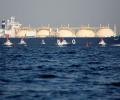
Iranian Deputy Foreign Minister Kazem Gharibabadi has urged India to take the lead in bringing peace to West Asia, highlighting the UAE's role in stalling BRICS consensus on the conflict. Gharibabadi also discussed a new framework with Oman for merchant vessels passing through the Strait of Hormuz.
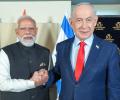
The Congress party has criticised the Indian government's diplomatic strategy, claiming a 'severe setback' if reports of Pakistan mediating between the US-Israel and Iran are accurate. The party alleges Pakistan's diplomatic engagement has surpassed India's, despite military successes.
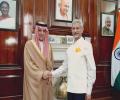
Saudi Arabia's Minister of State for Foreign Affairs Adel Aljubeir visited India on Thursday and held talks with External Affairs Minister S Jaishankar, focusing on de-escalating tensions between India and Pakistan. The visit comes as ties between India and Pakistan have further deteriorated following Indian military strikes on terror infrastructure in Pakistan. Iranian Foreign Minister Abbas Araghchi also arrived in New Delhi on a scheduled visit amidst the escalating tensions.

US President Donald Trump has indefinitely extended the ceasefire with Iran at the request of Pakistan, aiming to allow Tehran's leadership time to form a unified proposal to end the seven-week war.
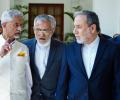
India has no intention to escalate tensions with Pakistan, but any military attacks on its soil will be met with a "very" firm response, External Affairs Minister S Jaishankar said on Thursday. Jaishankar made the remarks at a meeting with Iranian Foreign Minister Abbas Araghchi, emphasizing that the "barbaric" Pahalgam terror attack compelled India to carry out strikes on "cross-border" terror infrastructure on Wednesday. He reiterated that India's response was targeted and measured, but stressed that any further military attacks would be met with a firm response. The Iranian foreign minister, who landed in New Delhi amidst escalating tensions between India and Pakistan, called for de-escalation of the situation and stressed the need for regional cooperation to eradicate terrorism. The meeting also focused on boosting ties in areas of trade and investment, including the Chabahar port project.

The delegations from the US and Iran head to Islamabad on Friday, carrying a ceasefire that is already fraying, a Strait that is technically open and practically closed, and a negotiating agenda that would challenge even parties actually negotiating in good faith, which these groups are not. Prem Panicker continues his must read blog on the Iran War.

India on Thursday night swiftly foiled Pakistan's attempts to hit various key Indian installations including military stations at Jammu, Pathankot and Udhampur with drones and missiles, the defence ministry said.
